
Skip to content
Templates September 19, 2026

4 Best AI Photo Prompts to Create Ultra-Realistic Photos in 2026
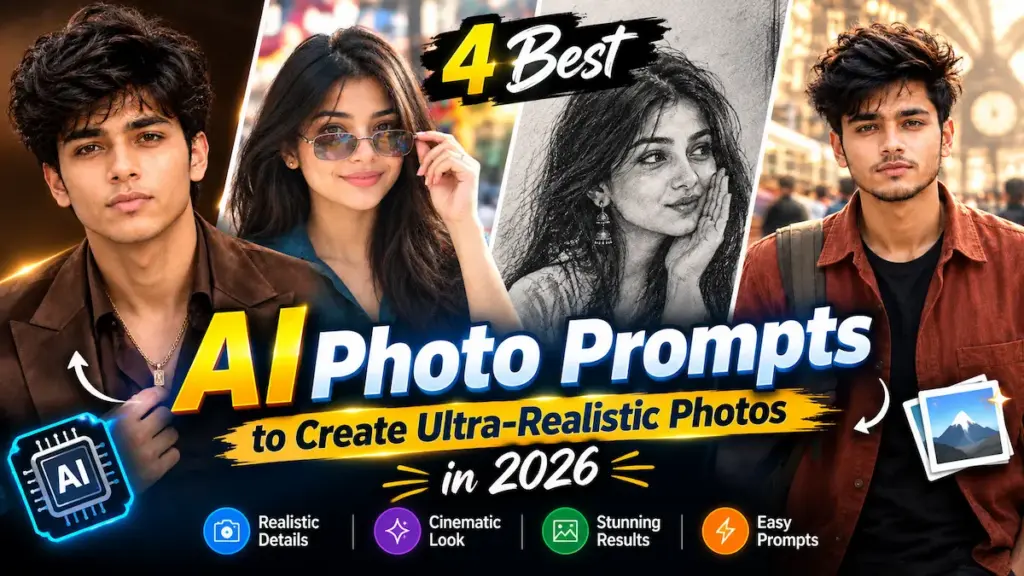
4 Best AI Photo Prompts to Create Ultra-Realistic Photos in 2026

Photorealistic Mastery 2026

4 Best AI Photo Prompts to Create Ultra-Realistic Photos in 2026

Unlock next-generation photographic realism with advanced optical shutter drag, tone-on-tone monochrome luxury, interactive dry charcoal sketches, and chrome street-swag aesthetics engineered for ChatGPT, Midjourney, and Gemini.

πŸ“Έ The Evolution of Physical Realism in Modern AI Photography

As diffusion models mature, achieving true photorealism in digital photography is no longer about stacking buzzwords like “photorealistic 8K”. Discerning audiences instantly spot synthetic skin smoothing and unnatural digital lighting. To produce imagery that looks undeniably genuine, generative prompts must simulate true camera mechanics: optical shutter drag, tactile fabric textures, physical surface relief, and disciplined depth of field.

By implementing these advanced AI Photo Prompts, creators can command sophisticated photographic principles effortlessly. Rather than relying on flat digital filters, these prompts model genuine physical interactionsβ€”such as commuters blurring into horizontal motion trails around a tack-sharp subject in a sunlit railway concourse, light glinting off chrome sunglasses in a busy marketplace, or a real human profile interacting seamlessly with a dry charcoal wall sketch. Each prompt structure guarantees 100% biometric likeness retention while producing stunning, magazine-grade visual drama.

Execute these cutting-edge concepts across your preferred platforms including ChatGPT Plus (GPT-4o), Google Gemini Advanced, and Midjourney v6. Explore further styling formulas in our AI Photo Archive and versatile Prompt Templates.

Look #1: Street-Swag Realism Ratio: 3:4 Vertical

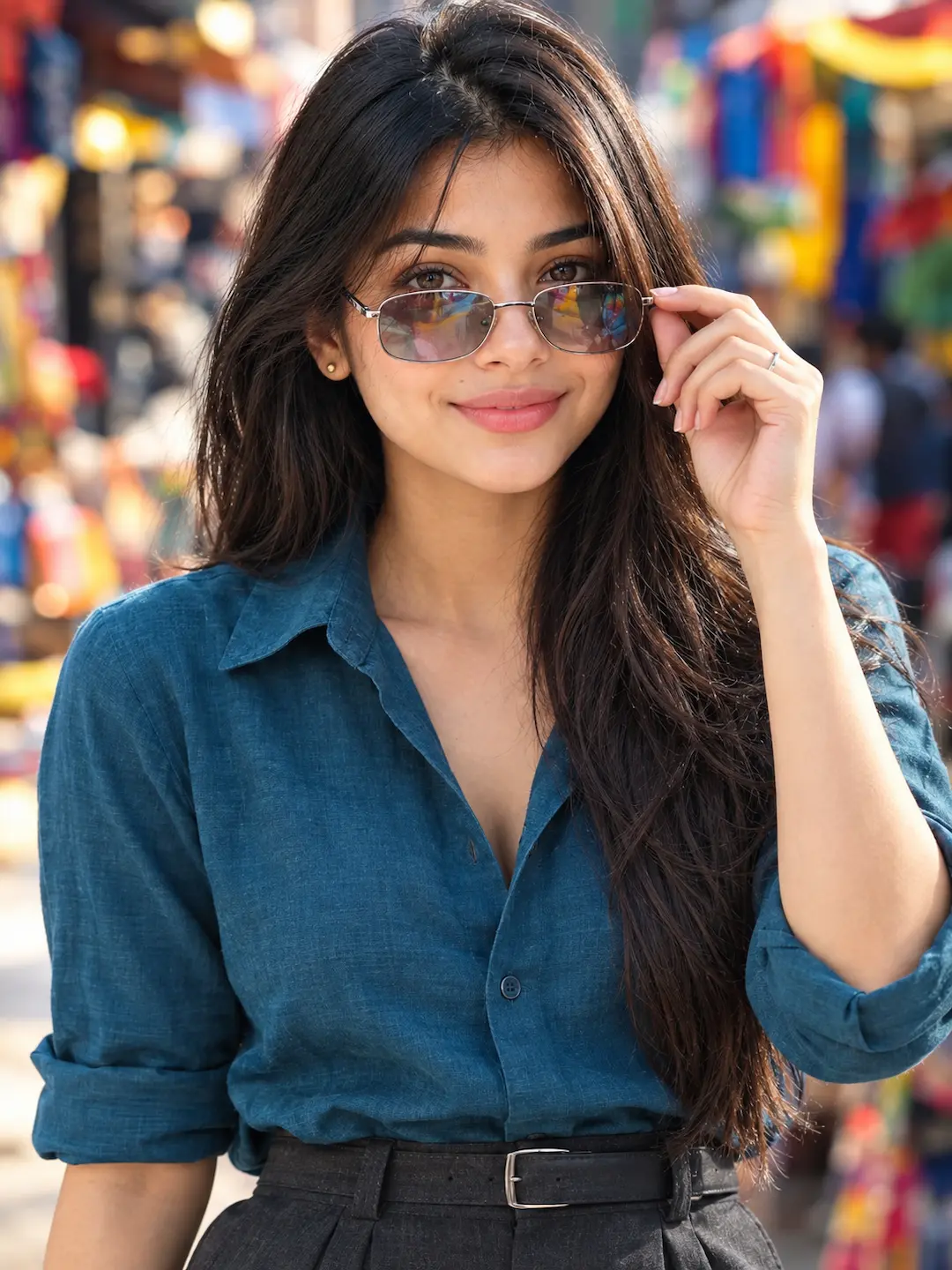
Chrome Lens Street: Petrol Blue Linen Shirt & Street-Swag

An aspirational, high-attitude street fashion portrait. Set against the smeared colors of a vibrant market lane, a woman in a tailored petrol-blue cotton-linen shirt and charcoal trousers adjusts her chrome-tinted sunglasses, with bright sunlight highlighting natural fabric creases and crisp fingers at the temple arm.
AI Photo Prompts Chrome Lens Street Petrol Blue Linen Shirt
The subject is the woman in the attached reference photo. Recreate her exact facial identity from its features β€” the same hairline, hairstyle, volume and texture, brow shape, eye shape and spacing, nose structure, lip shape, jawline and cheek structure, skin tone, and natural facial proportions β€” so she is unmistakably the same person, her features kept beautiful and their true shape unchanged. Her own hair from the reference is styled sharp, never recoloured and never recut. The reference photo’s own lighting, background and clothing are entirely discarded; her face is lit only by this scene’s own light. CHROME LENS STREET. A busy colour-washed market lane blurred behind her. OUTFIT: a well-cut petrol-blue shirt in matte washed cotton-linen with a fine natural weave and a soft, structured spread collar β€” no sheen, no satin, no gloss, no contrast collar. Worn relaxed but tailored through the shoulder, top two buttons open with the collar standing slightly, sleeves rolled twice to just below the elbow with a clean fold, tucked loosely into high-waisted dark charcoal tailored trousers with a slim dark leather belt. The fabric falls in soft natural creases at the elbow and waist, nothing clinging, nothing shiny. Jewellery kept deliberately minimal: one small plain gold stud in each ear and a single thin silver ring on the hand raised to her shades β€” nothing else, no necklace, no bangles, no bracelet, no nose ring. She faces the lens square. The chrome-tinted shades catch the street’s smeared colours as abstract glints, never a readable reflection, the adjusting fingers crisp and countable at the temple arm, her eyes clearly visible and readable through the light tint, direct and cool, her mouth level with the faintest confident curve. The single hook: a lane full of colour glinting off two lenses that never hide her eyes. Her other arm hangs loose, that hand bare. Her own hair worn loose and sleek over one shoulder. Bright street light keys her face while the market blur stays dimmer than her lit skin. Camera: 85mm lens, chest-up. Palette: petrol blue, charcoal, chrome, market multicolour. The expression is fully natural and human β€” the eyes and mouth agreeing, natural micro-asymmetry kept, never exaggerated, never a posed grin. The register is street-swag played straight and premium: bold colour, real attitude, immaculate grooming, quality fabrics with true weave β€” flashy but aspirational, everything crisp and immaculate, never costume. A true photograph, not an illustration or 3D render: fine film grain, true skin texture with visible pores, individual hair strands, correct catchlights, real fabric weave, accurate hands with natural fingernails and countable fingers wherever visible, physically believable shadows, the head sized naturally against the shoulders. One punchy committed colour grade owns the frame. Vertical 3:4 frame built for Instagram: the face largest and best-lit, the swag readable in one second at phone size. No readable text anywhere β€” no words, no letters, no numbers, no logos, no brands.
Pro Tip: Directing the AI to render sunglasses with “eyes clearly readable through a light chrome tint” keeps the subject’s gaze engaged while capturing radiant environmental reflections.
Look #2: Tone-on-Tone Luxury Ratio: 4:5 Vertical

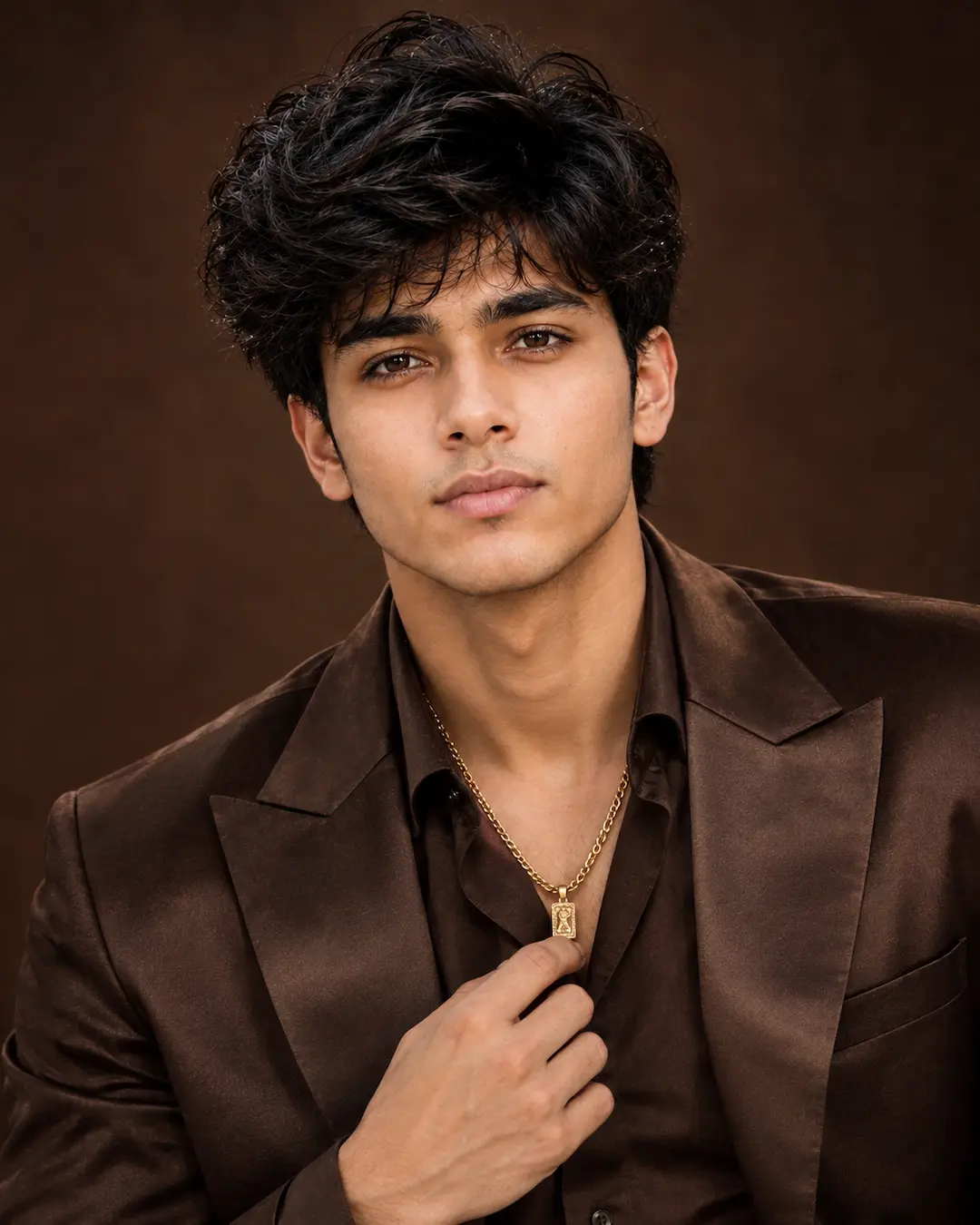
Chocolate Silk Tuxedo: Tone-on-Tone Studio Portrait

An exquisite study in monochromatic sartorial restraint. Dressed in a chocolate silk tuxedo and matching tonal shirt against a deep chocolate-brown backdrop, the garment separates through luxurious fabric sheen and soft directional light, punctuated by a bold gold chain.
AI Photo Prompts Chocolate Silk Tuxedo Tone on Tone Gold Chain
Same person as the attached reference: keep his exact face – hairline, hair, brows, eyes, nose, lips, jawline, skin tone – unchanged and unmistakable; ignore the reference photo’s lighting, clothing and background. TONE ON TONE: a chocolate-brown backdrop, and a chocolate silk tuxedo, tonal shirt – one colour family owning the whole frame in two close shades, the garment separating from the field by texture and light, never by hue. THE CONTRAST: a bold gold chain – jewellery doing all the contrast. GESTURE: his right hand at the chain pendant, fingers countable. EXPRESSION: a rich closed smile, chin high, eyes level – real, never posed, natural micro-asymmetry kept. Soft directional light from the front keys the face brightest with clear catchlights, gentle falloff on the backdrop. A true photograph: real skin texture, real fabric weave and sheen, honest shadows, film grain fine. 85mm, chest-up, vertical 4:5. Only this one person. No text anywhere.
Pro Tip: Tone-on-tone prompts produce elite luxury when you specify that separation happens “by texture and light, never by hue”β€”forcing the AI to render realistic silk weaves and edge falloff.
Look #3: Mixed-Media Surrealism Ratio: 4:5 Vertical

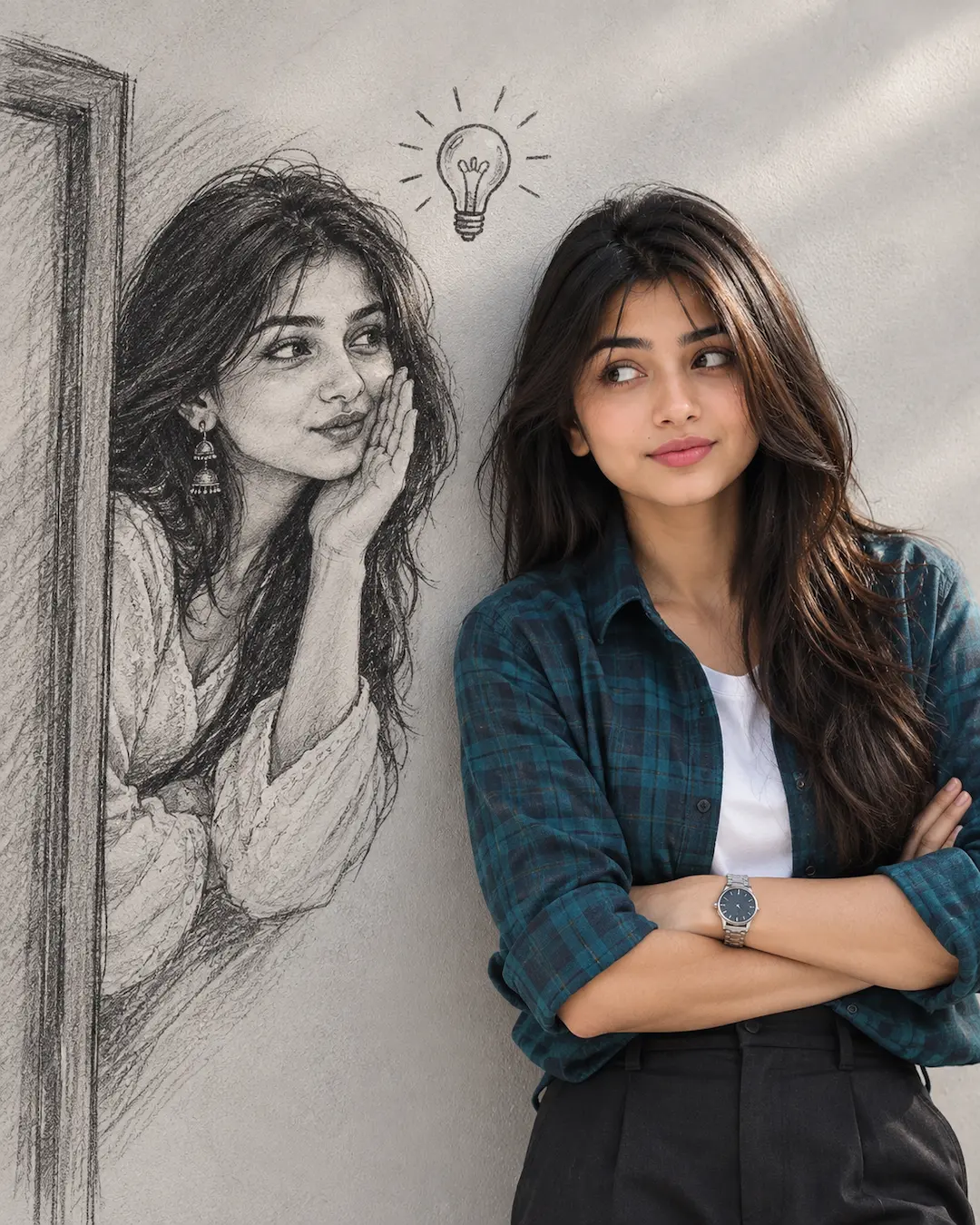
Real Photo + Dry Charcoal Sketch Self Interaction on Wall

A visually brilliant conceptual masterpiece. A photographic woman in a deep-teal flannel overshirt stands deadpan in profile beside a pale-grey wall, listening closely to a crisp dry charcoal sketch of herself leaning out of a drawn doorway, complete with authentic charcoal powder smudges and tooth texture.
AI Photo Prompts Real Photo Dry Charcoal Sketch Wall Interaction
Unmistakably the same woman from the attached reference photo β€” carry her exact features across without altering them: the same hairline, the same hair texture and natural fall, the same brow shape and set, the same eye shape and spacing, the same nose line and bridge, the same lip shape, the same jawline and cheekbone structure, and the same skin tone. The reference photo’s own lighting, background and clothing are entirely discarded and replaced by everything described here. THE MEDIUM RULE HOLDS ABSOLUTELY: the real person is a flawless ultra-realistic PHOTOGRAPH β€” true skin with visible pores, real flyaways, honest fabric weave β€” while the charcoal layer is honest DRY CHARCOAL on its surface: visible stroke direction, smudge shading, paper or wall tooth showing through, powder softness at the edges. The drawn layer lives entirely on its own plane and NEVER warps, overlaps or distorts the real person’s face or body. Where the charcoal depicts the same person, the sketch carries the LIKENESS LOCK translated into charcoal β€” the same hairline, brow shape, nose line, jaw in confident strokes, unmistakably the same person at a glance, as if a master sketch artist drew HER. A bright pale-grey wall. Drawn at its centre in crisp charcoal: HER SKETCH-SELF leaning far sideways out of a drawn doorframe, one drawn hand cupped beside its mouth mid-whisper, eyebrows waggling, a little drawn lightbulb rendered with radiating dashes floating above the space between them. The REAL woman β€” photographic β€” stands just clear of the wall in profile, her real ear tilted a precise inch toward the drawn whisper, arms crossed loosely, playing along completely deadpan. Styling: a deep-teal flannel overshirt over a white tee, dark trousers, a steel watch. One committed expression β€” the listening deadpan: eyes slid sideways toward the sketch without the head fully turning, one brow up, mouth flat but about to fail. Colour story: pale grey, charcoal, deep teal. Camera: eye level on a 50mm lens at f/2.8, both heads sharing the frame’s upper third, the drawn bulb between them. Grooming committed: thick hair styled with real volume and natural movement. One consistent light logic throughout β€” the single soft studio key from the upper left models the real person with honest shadows AND rakes the wall so every charcoal stroke’s relief and powder texture reads true; the drawn layer casts nothing. Her head sized naturally against her shoulders β€” head and body in true natural proportion, exactly as a real camera would capture her. The real woman is a true photograph, not an illustration or 3D render, carrying subtle fine film grain and small natural imperfections. Vertical 4:5 frame. No text, no words, no logos, no brands anywhere.
Pro Tip: Stating that “the drawn layer lives on its own plane and never overlaps the photographic subject” prevents generative AI from corrupting the human face with sketch artifacts.
Look #4: Slow Shutter Mastery Ratio: 4:5 Vertical

The Still Man in Railway Station: Long-Exposure Motion Blur

A breathtaking cinematic study of stillness amidst chaos. Staged in a grand railway concourse filled with warm morning haze, commuters rush past as horizontal motion blur streaks, while the subject stands tack-sharp at the center in a rust overshirt, exuding unhurried certainty and supreme composure.
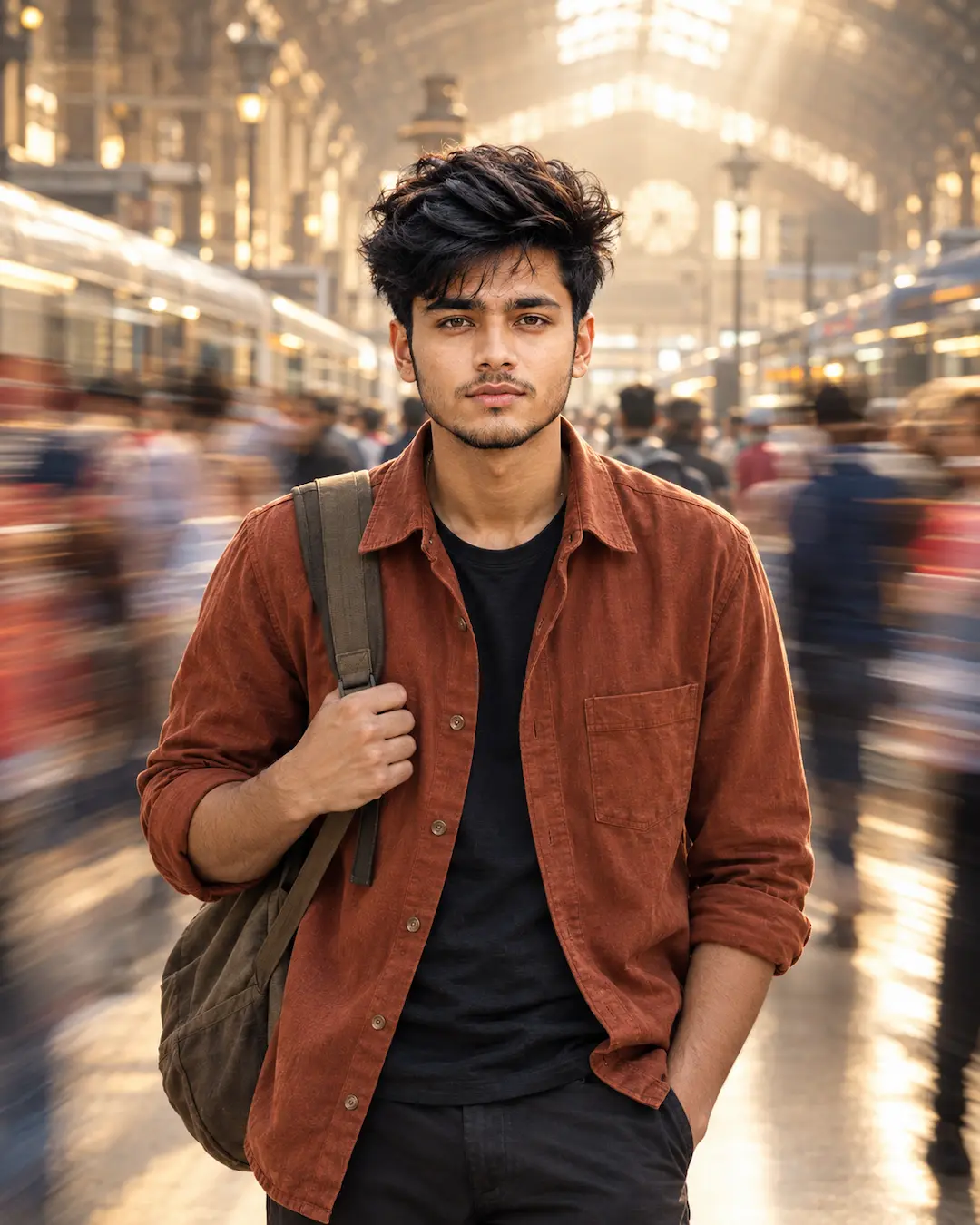
AI Photo Prompts Still Man Railway Station Long Exposure Motion Blur
The subject is the man in the attached reference photo. Recreate his exact facial identity from its features β€” the same hairline, hairstyle, volume and texture, brow shape, eye shape and spacing, nose structure, lip shape, jawline and cheek structure, beard pattern and density, skin tone, and natural facial proportions β€” so he is unmistakably the same person. The reference photo’s own lighting, background and clothing are entirely discarded; his face is lit only by this scene’s own light. Every other person in the frame is a DIFFERENT anonymous individual: their features stay soft, indistinct and out of focus, none of them resembling him in face, hairstyle or beard, and his is the only sharp face in the entire image. THE STILL MAN IN THE STATION. A grand old railway concourse in warm morning haze. The single hook: commuters stream past on both sides rendered as long horizontal motion streaks by a slow shutter, while he stands perfectly still and perfectly sharp at the centre in a rust overshirt and dark trousers, a canvas bag on one shoulder. His expression is unhurried certainty, eyes level to the lens, a faint half-smile at the rush he is not part of. The streaked figures stay anonymous colour trails, none forming a readable face. Shafted skylight keys his face while the moving blur reads softer and dimmer than his lit skin. Camera: 50mm lens on tripod framing, mid-thigh up. Palette: rust, concourse gold, streak grey. A true photograph, not an illustration or 3D render, carrying subtle fine film grain, true skin texture with visible pores, individual hair strands, realistic eye moisture with correct catchlights, real fabric weave with natural folds, accurate hands with natural fingernails, and physically believable shadows. The depth of field is the composition’s engine: the subject is tack-sharp from collar to hairline while every crowd figure β€” foreground backs and shoulders included β€” falls into honest optical softness at its own distance. Groomed and commanding: clean styled hair, wardrobe premium and deliberately opposite to the crowd’s, nothing crossing the subject’s eyes. Vertical 4:5 frame built for an Instagram story, WhatsApp status and reel cover: the sharp face largest and best-lit near the frame’s centre line, the crowd contrast readable in one second at phone size, and the composition still holding when cropped square. No readable text anywhere β€” no words, no letters, no numbers, no logos, no brands.
Pro Tip: Explicitly commanding that “every crowd figure is rendered as anonymous horizontal motion trails via slow shutter” forces the model to generate genuine optical motion blur without duplicating faces.

⚑ How to Execute These AI Photo Prompts for Flawless Likeness

Deploying high-complexity AI Photo Prompts requires understanding how image-to-image diffusion models process biometric landmarks. Follow this 5-step master workflow:

  1. Select a High-Resolution Reference Photo: Use a clear, sharp, uncompressed front-facing portrait with natural lighting and no heavy beauty smoothing.
  2. Launch an Advanced Generative Platform: Access ChatGPT Plus (GPT-4o), Google Gemini Advanced, or Midjourney v6.
  3. Attach Reference First: Always upload your master reference portrait before inserting text to ensure the model locks your facial proportions as an unbending foundation.
  4. Deploy the Exact Prompt Formula: Click Copy Prompt πŸ“‹ on your preferred aesthetic above and paste the prompt in its entirety into the prompt console.
  5. Refine Optical Lighting: If the generated image looks overly digital, follow up with: “Increase raw sensor film grain, reduce specular highlights, and enhance micro-pore realism.”

Ready to transform your finished stills into viral motion content? Check out our dedicated Video Prompts Suite.

πŸ“Š Technical Breakdown: Optical Specifications & Creative Registers

Compare the optical parameters, color palettes, and composition mechanics utilized across our 4 ultra-realistic prompts:

Creative Concept Optics & Focal Length Lighting Logic Primary Hook
Chrome Lens Street 85mm Prime Lens, Chest-Up Bright Ambient Daylight Chrome Shades Glinting Market Colors
Chocolate Silk Tuxedo 85mm Lens, Chest-Up Soft Directional Key + Falloff Tone-on-Tone Fabric & Bold Gold Chain
Charcoal Sketch Interaction 50mm Lens at f/2.8 Aperture Studio Key Raking Wall Relief Real Person + Dry Charcoal Whisper
Still Man in Station 50mm Lens on Tripod Framing Shafted Skylight Concourse Sun Sharp Subject vs Long-Exposure Crowd Blur

❓ Frequently Asked Questions (Ultra-Realistic AI Photography)

How do I prevent diffusion models from generating cloned faces in crowd scenes? +
Always instruct the AI that “every other person in the frame is an anonymous individual kept out of focus, none resembling the subject.” Adding slow shutter motion blur commands turns the surrounding crowd into abstract light streaks, ensuring only your face remains sharp and unique.
Why does tone-on-tone styling look so realistic in AI-generated portraits? +
When an outfit and background share the same color family (such as chocolate silk against a chocolate backdrop), the AI cannot rely on cheap color contrast. It is forced to render accurate edge lighting, realistic specular fabric sheen, and authentic shadows to separate the subject, creating stunning optical realism.
Can I combine photographic and hand-drawn sketch styles without making the face look cartoonish? +
Yes, by enforcing the “MEDIUM RULE”. The prompt explicitly isolates the real human as an ultra-realistic photograph with visible pores while confining the sketch to a flat wall surface with authentic dry charcoal tooth and powder smudges, keeping both styles completely separate.
What is the best aspect ratio for publishing cinematic AI portraits on Instagram? +
The 4:5 vertical aspect ratio (1080x1350px) is optimal for Instagram feed posts and WhatsApp status. It occupies the maximum vertical screen space on mobile devices, ensuring the subject’s sharp facial details and textural styling are instantly readable at phone size.

πŸš€ Redefine Your Visual Presence in 2026

Mastering generative portraiture requires combining artistic vision with strict physical realism. By utilizing these AI Photo Prompts, you can create show-stopping, highly engaging digital photography that looks authentic, refined, and undeniably human.

Pick your favorite look today and start creating! Make sure to bookmark our studio for daily trending prompts across high-fashion aesthetics, creative portraiture, and cinematic storytelling.

Curated with passion by RB Prompt Studio #RBPrompt #RBPrompts #AIPhotoPrompt